Last updated: August 19, 2026
For more on this topic, see our jackery guide.
Jackery Explorer 300 v2 Portable Power Station Review – Insights and Features
The Jackery Explorer 300 v2 portable power station is designed for outdoor enthusiasts, remote workers, and anyone needing a compact, versatile source of power on the go. It suits users who want a lightweight, reliable battery pack to keep essential devices running during camping trips, road travel, or brief power outages. With a 292Wh capacity and multiple output options, it aims to provide practical off-grid energy without excessive bulk.
However, this model balances capacity and weight, meaning it won’t power large appliances for extended periods. This review explores the Explorer 300 v2’s features, real-world usability, and trade-offs to help potential buyers decide if it fits their power needs and lifestyle.
Disclosure: As an Amazon Associate I earn from qualifying purchases.

- Ultra-Lightweight: Weighing only 7.5 lbs, the new Explorer 300 is 17% lighter than the i…
- Versatile Power for 6 Devices: Equipped with 2 AC outlets, a 100W USB-C PD port, 2 USB-A…
- Built to Last: Upgraded with premium LiFePO4 chemistry, this portable generator delivers…
Overview
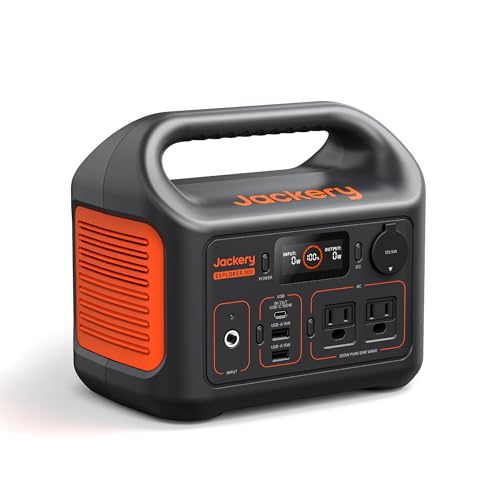
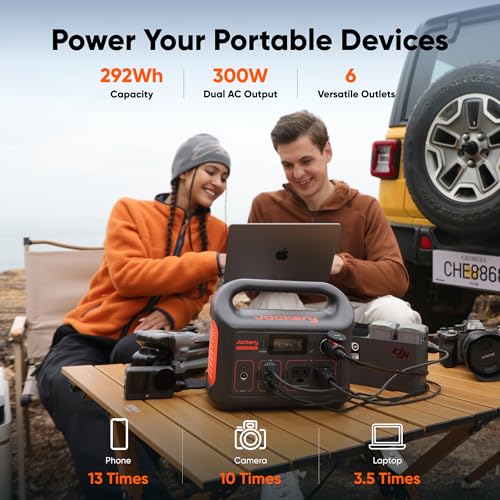
The Jackery Explorer 300 v2 is a portable power station with a 292Wh lithium iron phosphate (LiFePO4) battery. Weighing just 7.5 lbs, it is about 17% lighter than comparable models in its class. The unit includes two AC outlets, a 100W USB-C Power Delivery port, two USB-A ports, and a 120W car port, allowing simultaneous charging of up to six devices. It delivers a rated output of 300W with a peak surge of 600W, suitable for laptops, drones, cameras, and smaller electronics.
One of the notable upgrades in this version is the use of LiFePO4 battery chemistry, which promises over 4,000 charge cycles before the battery capacity drops to 70%. This suggests a longer service life exceeding 11 years under typical use. The Explorer 300 v2 is also optimized for solar charging, compatible with Jackery’s 40W or 100W solar panels for off-grid power replenishment.
The Explorer 300 v2’s lightweight design combined with durable battery technology makes it a practical companion for users prioritizing portability and longevity in their portable power solution.
What Buyers Use It For
“Jackery Solar Generator 300 and 40W Solar Panel,292Wh,300W AC makes the most sense when you want something practical to live with day to day. Ultra-Lightweight: Weighing only 7.5 lbs, the new Explorer 300 is 17% lighter than the ind…”
What to Expect
- Ultra-Lightweight: Weighing only 7.5 lbs, the new Explorer 300 is 17% li…
- Versatile Power for 6 Devices: Equipped with 2 AC outlets, a 100W USB-C …
- Check fit or sizing first.
- Expect some trade-offs by use case.
- Camping and Outdoor Adventures: The Explorer 300 v2 provides power for charging phones, cameras, portable lights, and small appliances during multi-day trips without access to electrical outlets.
- Remote Work and Mobile Offices: Its USB-C PD port supports fast charging of laptops and tablets, allowing users to maintain productivity in remote locations or during travel.
- Emergency Backup Power: Suitable for powering essential devices during brief outages, such as phones, CPAP machines, or radios, though limited by its 292Wh capacity.
- Solar-Powered Exploration: When paired with compatible solar panels, it can be recharged sustainably in the field, supporting longer off-grid stays.
Key Features in Practice
- 292Wh Capacity: Supports charging multiple small devices fully or running low-wattage equipment for several hours, but not intended for high-draw appliances or extended power outages.
- 300W Rated Output (600W Peak Surge): Can handle devices with moderate power needs like laptops and drones, but users should avoid appliances requiring sustained high wattage.
- LiFePO4 Battery Chemistry: Offers a longer lifespan and more charge cycles compared to traditional lithium-ion batteries, reducing the need for frequent replacements over years of use.
- Fast Solar Charging Compatibility: Enables recharging to 80% capacity in about 2.8 hours with a 100W solar panel, making it suitable for users relying on renewable energy during extended outdoor activities.
Setup & Learning Curve
Setting up the Jackery Explorer 300 v2 is straightforward. The unit comes ready to use with an AC adapter and car charger cable included. Users simply charge the battery fully before first use and connect devices via the clearly labeled ports.
For solar charging, pairing with compatible Jackery solar panels involves connecting the panel’s output cable to the power station’s solar input port. The process is simple but requires basic understanding of solar power principles. The unit’s display shows battery status and output wattage, which helps users monitor usage and charging in real time.
The Explorer 300 v2 does not currently support app control, so all operations are manual and visible on the device itself, which keeps the learning curve minimal.
Build Quality & Design Notes
The Explorer 300 v2 features a compact, rectangular design with a smooth, durable plastic enclosure. Its integrated handle is ergonomic and sturdy, facilitating easy transport during hikes or travel. The weight of 7.5 lbs strikes a balance between portability and battery capacity.
Port selection supports diverse device compatibility, with two AC outlets enabling the use of standard plugs, USB-C PD for fast charging modern devices, and USB-A for legacy electronics. The 120W car port adds flexibility for charging or powering automotive accessories.
Overall, the build quality reflects a solid, no-frills approach suitable for outdoor use and moderate handling, although users should avoid exposure to extreme weather or moisture.
Maintenance & Care
Maintaining the Explorer 300 v2 involves routine charging and storage practices. Keeping the battery charged between 20% and 80% can help prolong battery health, though the LiFePO4 chemistry is more forgiving than other lithium types.
Users should store the unit in a cool, dry place when not in use and avoid complete discharges for extended periods. Cleaning the exterior with a dry cloth and ensuring ports remain free of debris will help maintain reliable connections.
There are no user-serviceable parts inside; battery replacement or repairs should be handled by authorized service providers if needed.
Strengths vs Trade-Offs
| Strengths | Trade-Offs |
|---|---|
| Lightweight and portable at 7.5 lbs | Limited 292Wh capacity restricts runtime for high-draw devices |
| Durable LiFePO4 battery with 4,000+ charge cycles | Only two AC outlets available, limiting simultaneous use of multiple large devices |
| Fast solar charging support with Jackery panels | Solar panels sold separately; slower charge times with smaller panels |
| Versatile port selection including USB-C PD | No app control or advanced monitoring features |
Who It’s For (and Who Should Skip)
The Explorer 300 v2 is well suited for users needing a lightweight, reliable power source for small electronics during short trips or power outages. It fits outdoor adventurers, digital nomads, and emergency preparedness enthusiasts who prioritize portability and battery longevity.
It is less appropriate for those requiring long-duration power for high-wattage appliances like refrigerators, electric kettles, or power tools. Also, users looking for smart app integration or multiple AC outlets may find this model limiting.
Other Options to Consider
- Jackery Explorer 1000 v2: For users needing significantly higher capacity (1,070Wh) and power output (1,500W), this model supports more devices and longer runtimes but weighs over 23 lbs.
- Jackery Explorer 300 Dune White: Essentially the same as the Explorer 300 v2 but with a different color option, offering identical performance and features.
- Jackery Solar Generator 300 with 40W Solar Panel: This bundle includes the Explorer 300 and a 40W solar panel, providing an integrated solar charging solution out of the box.

- Ultra-Lightweight: At only 7.5 lbs, the Explorer 300 delivers a robust 292Wh capacity wh…
- Versatile Power for 6 Devices: Equipped with 2 AC outlets, a 100W USB-C PD port, 2 USB-A…

- Powerful yet Compact: Boasting a 1,500W AC output and a 3,000W surge peak, the Solar Gen…
- One Hour Fast Charging: Charge your Explorer 1000 v2 Portable Power Station from 0% to 1…
FAQ
- Is the Jackery Explorer 300 v2 compatible with all solar panels?
It is designed to work specifically with Jackery solar panels, such as the 40W and 100W models. Using third-party panels may require adapters and might not guarantee optimal charging performance. - How difficult is it to set up for solar charging?
Solar setup involves connecting the compatible solar panel to the power station’s solar input port. The process is simple and doesn’t require technical expertise, though users should ensure adequate sunlight and panel positioning. - How reliable is the battery over time?
The LiFePO4 battery chemistry offers over 4,000 charge cycles before capacity drops to 70%, suggesting reliable performance for more than a decade under normal use. - Are there any limitations to the devices I can power?
The Explorer 300 v2 supports devices up to a 300W continuous load, with a 600W surge peak. Devices requiring higher wattage or continuous heavy loads may exceed its capabilities. - Does the Explorer 300 v2 have an app for monitoring?
Currently, this model does not support app-based monitoring or control. Users rely on the built-in display for real-time information about battery status and output.
What Most Buyers Overlook
- Check long-term fit for your exact setup before choosing a replacement part.
- Small installation details often matter more than headline specs on review pages.
Verdict
The Jackery Explorer 300 v2 portable power station offers a balanced combination of portability, durability, and versatile charging options suitable for a range of outdoor and emergency scenarios. Its lightweight design and long-lasting LiFePO4 battery chemistry make it a practical choice for users who need dependable power for smaller devices without the burden of heavy equipment.
While its capacity and output limit usage to low- and moderate-power devices, the Explorer 300 v2’s compatibility with solar panels and multiple charging ports provide flexibility for off-grid use. Prospective buyers should weigh their specific power needs against the unit’s size and features to determine if it aligns with their intended applications.